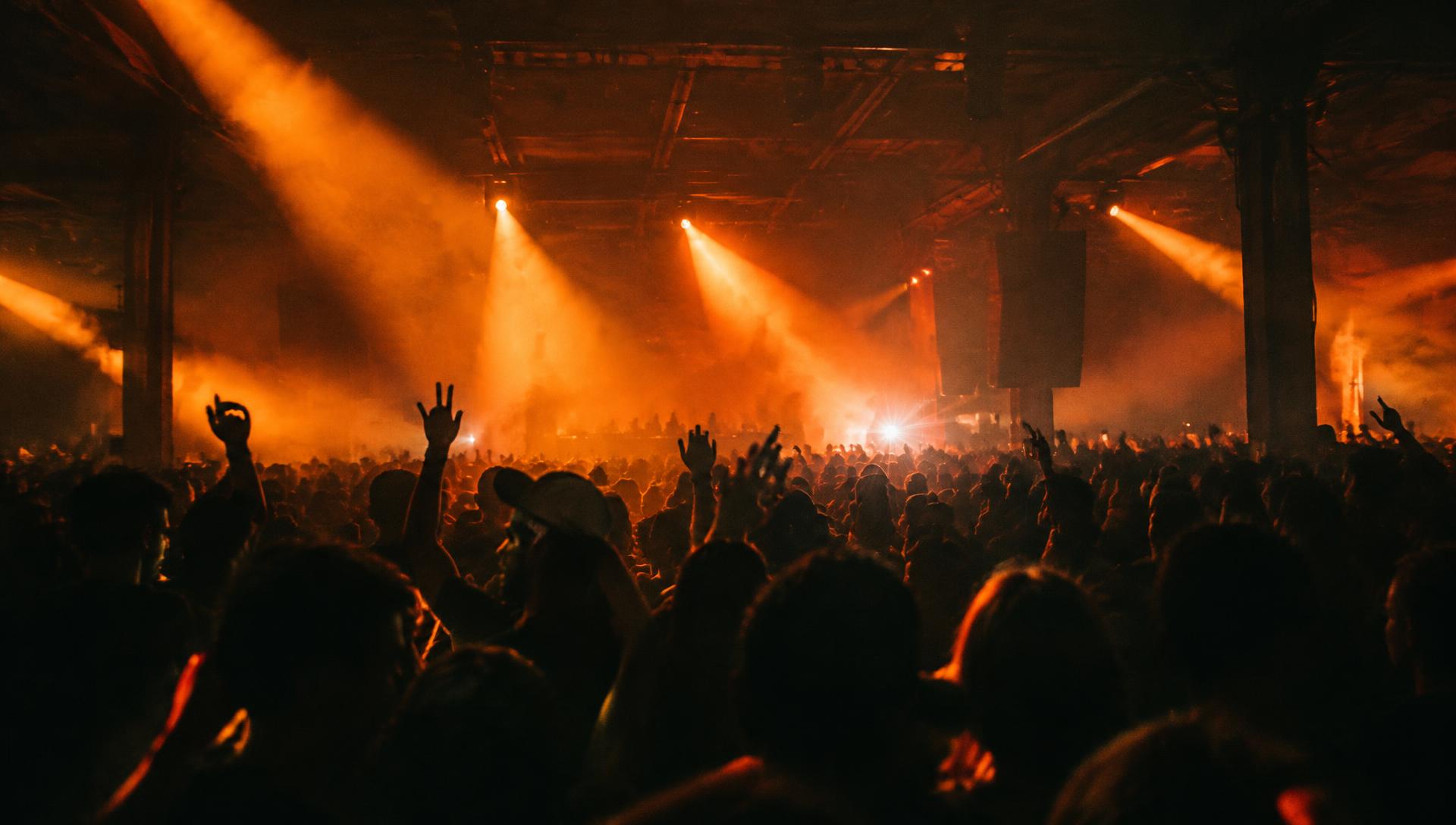
Travel through the years and discover how an entirely new music genre was born. A sound that would grow into a worldwide movement and a way of life. Explore the key moments, legendary artists and organisations that shaped HARDSTYLE.
Before Hardstyle took over dance floors around the world, there was Hardcore. In the early 1990s, a group of friends from Amsterdam, the Netherlands, who shared a passion for the harder sounds of electronic music, regularly attended parties such as Multigroove, organised by Ilja Reiman. Inspired by the growing underground scene, they decided to organise their own events. Their idea would go on to shape an entire generation of electronic music fans.
On October 3, 1992, the first Thunderdome event took place at the Thialf Stadium in Heerenveen. Organised by Irfan Ewijk, Duncan Stutterheim and Theo Lelie, the founders of ID&T, the event helped lay the foundations for what would become one of the most influential movements in electronic dance music. The lineup featured legendary names such as Buzz Fuzz, Dano, The Prophet and Gizmo.
Throughout the 1990s, Hardcore exploded in popularity across the Netherlands and beyond. Its aggressive beats, dark atmosphere and rebellious spirit gave rise to the Gabber movement, a youth culture that went far beyond music. With their shaved heads, tracksuits and distinctive dance style, Gabbers became an unmistakable part of the era.
Beyond shaping the Hardcore scene, ID&T would go on to revolutionise the dance music industry itself. With groundbreaking events such as Mysteryland and Sensation, the Dutch organisation helped establish new standards for large-scale electronic music festivals, combining music, spectacular production, elaborate stage designs and immersive experiences. Their approach influenced event organisers around the world and helped shape the modern dance event as we know it today.
However, by the late 1990s, the Hardcore scene began to lose its momentum. Commercialisation, the rise of Happy Hardcore and events aimed at younger audiences changed the genre's image. Between 1997 and 1999, Hardcore went through a major decline, and many believed its golden days were over.
But the story didn't end there. In the early 2000s, Hardcore returned with a harder, darker and more aggressive sound. Producers such as Promo, Nosferatu, Evil Activities and Endymion helped shape what became known as Millennium Hardcore, breathing new life into the scene.
And while Hardcore was evolving, a new sound was beginning to emerge from the same underground dance culture, a sound that would soon become known as Hardstyle.
ThunderdomeID&TGabber
2000
The Search for a New Sound
By the late 1990s, the oldschool feeling was beginning to fade. Two friends from Landsmeer, Wildrik Timmerman and Wouter Tavecchio, wanted to bring back the atmosphere and sounds they had fallen in love with years earlier. Through their organisation, Qlass Elite, they started hosting events such as 1991–1992 · Remember? and HouseQlassics & Oldstyle Outburst, celebrating the classic House and Hardcore sounds of the past.
The events were a success, but Wildrik and Wouter soon recognised that the audience was ready for something new. The classic sounds were no longer enough. People wanted fresh music, new influences and a different direction for the harder dance scene.
Meanwhile, their friend Rogier Werver was searching for new sounds of his own. Together with Jonas Schmidt, he was putting up event posters across Amsterdam while exploring the rapidly evolving dance music scene. This search eventually led to a new concept: Qlimax.
On June 3, 2000, the first Qlimax event took place at the Beursgebouw in Eindhoven. Instead of focusing on established Hardcore DJs, the lineup brought together artists from Trance, UK Hard House and House, including Armin van Buuren, CJ Bolland, Ferry Corsten and Rank 1. The event became a platform for experimentation, where different styles collided and new possibilities began to emerge.
The concept attracted attention beyond the Trance and House scenes. Even established names from the Hardcore community were curious about these new sounds and the direction in which electronic music was heading.
When the second edition of Qlimax took place in October 2000, two legendary figures from the Hardcore scene, Pavo and Lady Dana, joined the lineup. They were exploring the sounds of Hard House and Hardcore in a new context, experimenting with existing records rather than their own productions. The sound was still raw, unfamiliar and constantly evolving, but something exciting was beginning to take shape.
The foundations of a new era were being laid...
Qlass EliteQlimaxBeursgebouw
2001
The Sound Takes Shape
In February 2001, another edition of Qlimax took place at De Boelelaan in Amsterdam. For just 15 Dutch guilders at the door, visitors could experience a lineup featuring artists such as Gary D, Jon the Dentist, Pila, Lady Dana, Sunny D and even Laidback Luke. The scene was evolving rapidly, and the boundaries between Trance, Hard House and Hardcore were becoming increasingly blurred.
Around this time, Qlass Elite evolved into the organisation that would become known as Q-Dance. The letter Q stood for Quality, a principle that would remain at the heart of the organisation. But Q-Dance wanted to do more than host occasional large-scale events. They needed a place where their new musical direction could develop on a regular basis.
They found the perfect home at the Hemkade in Zaandam, where they launched Qlubtempo, a club night dedicated to the harder and more experimental sounds of the moment. DJs such as Warmduscher, Pila, Luna, Sunny D and the Alpha Twins played whatever excited them, as long as it was fresh, hard and new. There were no strict rules defining the sound, and producing your own music was not yet a requirement to make a name for yourself as a DJ.
On July 28, 2001, another edition of Qlubtempo welcomed an Italian DJ and producer making his Dutch debut: Technoboy. Having started his DJ career in 1992 under the name DJ Gius, he brought something different to the scene. Unlike many of the DJs around him, he was producing his own music, helping establish a new direction that would soon influence a generation of Dutch Hardstyle producers.
Meanwhile, the movement was growing beyond the Amsterdam area. In Rotterdam, event organiser B2S launched the first edition of Hard Bass at the Tropicana. Once again, experimentation was at the heart of the event, with artists such as Marco V, Franky Jones and Lars exploring the harder sounds emerging from the underground.
Qlimax was also ready for the next step. In June 2001, the event moved to the legendary Heineken Music Hall in Amsterdam, providing a bigger stage for the developing sound. The lineup featured German Acid and Techno artist Kai Tracid, while MC Ruffian was introduced to the event, adding another dimension to the live experience.
The music played at these events reflected just how diverse the scene had become. Tracks from artists such as DJ Scot Project, Hennes & Cold, A*S*Y*S* and Zenith vs. Avex brought influences from across the harder electronic music spectrum to the dance floor.
Among these sounds, productions such as Ravers' Rules by Technoboy and I'm Your Deejay by Zenith vs. Avex stood out. One of the defining elements of this emerging sound was the use of reverse basslines, a technique that was still relatively uncommon in this style of music. Combined with a tempo of around 145 BPM, these powerful, bouncing basslines helped shape the distinctive sound that would soon become known as Hardstyle.
Hardstyle did not have a fixed identity yet, but the pieces were falling into place. Q-Dance was building the platforms, Qlubtempo was giving DJs the freedom to experiment, Hard Bass was expanding the movement, and producers such as Technoboy were beginning to turn these influences into something new. The foundations for a genre of its own were becoming stronger with every event.
Q-DanceQlubtempoHard Bass
2002
We Call It: HARDSTYLE
2002 was a turning point for the emerging Hardstyle scene. Rogier Werver of Q-Dance wanted to take things to the next level: instead of DJs simply playing the vinyl records they discovered in record shops, the focus was shifting towards original productions and a sound of their own.
Technoboy had already been developing his own productions for years. Now, Dutch Hardcore veterans such as DJ Isaac, Zany and The Prophet were ready to help shape this new musical direction.
And the first defining Hardstyle tracks began to appear.
DJ Isaac released his unforgettable track On the Edge. Zany established the legendary Fusion Records label in Eindhoven, delivering powerful releases such as Rock the Beatz and Be on Your Way.
Q-Dance also launched its own record label, Q-Dance Records. One of its early releases was Luna Meets Trilok & Chiren – We Control the Sound, released in February 2002. The collaboration would later become known as DHHD.
Dov Elkabas, better known as The Prophet, was one of the Hardcore legends who had helped shape the sound of an entire decade. As Q-Dance began building its events around fresh names and a new musical direction, however, he felt increasingly overlooked.
He wanted to be part of these new events, but bookings were not coming his way as he had hoped. Instead, he was mainly associated with events such as Houseqlassics, where he was expected to play the old Hardcore classics.
It wasn't necessarily that Q-Dance disliked The Prophet. The organisation was looking for fresh names to represent the emerging sound, while The Prophet was still strongly associated with Hardcore.
But Dov had something to prove.
His response would become one of the most important moves in Hardstyle history: Scantraxx.
Founded by The Prophet, the label became a major force in the development of the genre. It was already delivering six releases in 2002, including Hardheadz – Wreck Thiz Place / Hardhouz Generation. These productions represented a fresh approach and helped establish a sound that was moving beyond the boundaries of traditional Hardcore.
The strategy began to pay off. In September, The Prophet was booked for a Qlubtempo edition, giving him an opportunity to showcase his vision of the new sound to the very crowd helping shape the scene.
There was plenty happening on the event front, too.
B2S launched its first outdoor event, Decibel Outdoor 2002, at Recreatieoord Binnenmaas. The Rotterdam-based organisation brought together three areas dedicated to Trance, Hardstyle and Hardcore.
It was another sign that harder electronic music was becoming a central part of the Dutch dance scene, with organisers creating dedicated spaces for different sounds and audiences.
Q-Dance was experimenting with new concepts as well. At its home base, the Hemkade in Zaandam, the organisation introduced Club Q-Base, hosting regular club events featuring different genres, including Trance, Classics, Techno and, of course, Hardstyle.
Week after week, these club nights gave the emerging sound another place to grow.
While Dutch Hardstyle production was only beginning to take off, Italian producers were already releasing track after track.
Q-Dance brought the Italian sound to the Heineken Music Hall with X-Qlusive Italy. The event featured names such as Brain Ovulation, Daniele Mondello, Super Marco May, Tatanka, Zenith, Trance Generators and, of course, Technoboy.
The Italian scene had developed its own distinctive approach, and these artists were becoming essential figures in the evolution of Hardstyle.
The genre was no longer being shaped by just one country. Different production styles and musical influences were coming together to create something bigger.
Another major player was making its move.
In the early 2000s, ID&T had become closely associated with Trance, House and Techno. Following the success of the first Sensation event at the Amsterdam ArenA in 2000, the organisation expanded the concept in 2002 with Sensation Black.
Unlike the White edition, Sensation Black focused on harder electronic sounds. Its first line-up included Chris Liebing, Lady Dana, Marco V, Mauro Picotto and Michel De Hey.
The arrival of Sensation Black showed that harder music was attracting attention beyond the established Hardcore and Hardstyle circuit. Major event organisers were beginning to recognise its potential.
Qlimax also moved to a new location in 2002: the SilverDome in Zoetermeer.
The event continued to grow alongside the scene, becoming part of an increasingly important calendar of parties that helped give Hardstyle a stronger identity.
But the biggest change of the year wasn't happening at just one event or label.
It was happening everywhere.
Hardstyle was slowly exploding across the Netherlands. It was no longer limited to the Events. Venues such as Matrixx, Starlight, Peppermill, Bumpers and Plaza di Christo were booking DJs including Luna, Dana, Pavo and DJ Isaac.
The sound was spreading through clubs, record shops and dance floors. More producers were experimenting, more labels were releasing music, and more events were giving the genre a platform.
Hardstyle was becoming a movement of its own.
And then came one of the defining moments of 2002.
On 4 July 2002, Q-Dance registered the name “Hardstyle” as a trademark.
According to the story behind the name, the term emerged from a brainstorming session at the Q-Dance office. It brought together words Hardcore and Oldstyle to describe this new musical direction: Hardstyle.
As the scene grew, Q-Dance recognised that the name needed room to develop beyond the organisation itself. Rather than trying to stop others from using the term as the genre spread, the focus shifted towards allowing the movement to grow.
The name was there. The sound was developing. And the scene was ready to take the next step.
2002 gave Hardstyle an identity. But one of the biggest years in the genre's history was still to come.
Q-DanceScantraxxFusion Records
2003
Maximum Force Readiness
On January 25, 2003, Q-Dance did something revolutionary. Long before Tiësto in Concert and Luna’s One Man Show, Q-Dance put a single artist in the spotlight. The new concept was called X-Qlusive, and no one other than the Queen of Hardstyle herself would host the very first edition: Dana.
She was no longer performing under the name Lady Dana, which had also been associated with her Hardcore performances. From 22:00 until 07:00, the Heineken Music Hall became her temple. A new concept was born, one that would remain part of Hardstyle history for more than two decades.
Meanwhile, B2S, still known for throwing plenty of Oldschool parties, hosted another edition of Hard Bass at the Statenhal in The Hague. Two new names appeared on the Hardstyle lineup: The Beholder & Balistic.
Already well known in the Hardcore scene of the 1990s through their aliases Neophyte and Panic, they had also become interested in Hardstyle. In 2001, they founded their own label, Seismic Records, and now they were delivering the anthem for this edition of Hard Bass.
Seismic Records represented a rougher and darker approach to Hardstyle than labels such as Scantraxx and Fusion. In April, another name emerged: Max Enforcer. Also known as Evil Activities in the Hardcore scene, he was helping to shape the Millennium Hardcore sound. With his Hardstyle alias, he joined The Beholder and released Overdrive.
Hardstyle was taking the Netherlands by storm. Q-Dance was making its mark in Amsterdam, while B2S was building its presence around Rotterdam and The Hague. But something was growing in the south of the country, too.
In Eindhoven, home to Fusion Records, a nightclub called De Danssalon launched a new series of Hardstyle events: Headliner – The Maximum Power of Hardstyle. The resident DJs were none other than the Showtek brothers. They were already producing their own tracks and scored a major hit with Seid ihr bereit, released on Q-Dance Records.
In Gemert, a major player in the world of entertainment venues opened Time Out, which would become one of the largest nightlife venues in the Netherlands. Hardstyle DJs were invited to perform there week after week, giving the scene another important platform to grow. This connection between Time Out and Hardstyle would continue for more than 14 years, making the venue a familiar destination for generations of fans.
Meanwhile, a duo that had already been producing music for a couple of years released Disappearance on Fusion Records. The names behind the track were Fabian Bohn and Pieter Heijnen, better known as Brennan & Heart.
And if you know what happened when the two eventually went their separate ways, you might already have an idea of which artist would emerge from this story…
On April 12, another edition of Qlimax took place at Thialf in Heerenveen. This time, something new was added to the Qlimax legacy: an anthem. With Follow the Leader, none other than The Prophet delivered what is widely regarded as the first official Qlimax anthem.
Q-Dance was nowhere near finished with its new ideas. On May 3, it opened Q-Beach, a beach club located on the beautiful coastline of Bloemendaal aan Zee. The venue hosted talent nights, Chill Out Sundays and after-party events, bringing the Q-Dance experience to the beach.
But none of this could compare to the next step Q-Dance was about to take.
DEFQON.1 2003 – MAXIMUM FORCE READINESS
On June 14, Q-Dance launched what would become one of its most successful concepts of all time at Almere Strand. The first edition already featured the legendary colour-coded areas: Red, Blue, Black, Orange, Green and Purple. Each area had its own harder styles sound, creating a festival experience unlike anything Hardstyle fans had seen before.
The legendary Red stage featured names such as Donkey Rollers, Haze and Abyss, while the Blue stage welcomed Max B. Grant and Italian legend Activator.
Hardstyle was evolving faster than ever, and Defqon.1 was about to become a defining part of its history.
And if the very first edition of Defqon.1 wasn’t enough, Q-Dance even organised an official afterparty at its home base, the Hemkade, running from 23:00 until 06:00. The lineup featured a whole new night of harder styles, with names such as The Prophet, Jimmy the Sound, Super Marco May, Pila and Luna.
Meanwhile, ID&T delivered another edition of Sensation Black, bringing the harder sounds to the Amsterdam ArenA. The event featured a legendary set by German DJ Kai Tracid, while DJ Luna made his debut at the iconic stadium. Another major moment in a year when Hardstyle was reaching an ever-growing audience.
While ID&T was increasingly focusing on House, Trance and Electro events such as Shockers, Trance Energy and Innercity, it was also ready to take its open-air festival Mysteryland to the next level. With a new location at Haarlemmermeerse Bos in Hoofddorp, the festival went big!
And of course, a Hardstyle area couldn’t be missing. You could probably already guess who was behind it: Q-Dance.
At the mighty pyramid, Q-Dance created its legendary Mysteryland stage, bringing its unmistakable harder styles identity to one of the Netherlands’ biggest festivals. The Q-Dance crew even started a playful challenge: build a stage bigger and more impressive than the festival’s mainstage.
And they certainly made an impression. The pyramid became such an iconic sight that, according to the story, newspapers often chose pictures of the Q-Dance stage over the mainstage when reporting on Mysteryland. A perfect example of how Q-Dance was turning stage design into a spectacle of its own.
And as you already know, Q-Dance loves its afterparties! Mysteryland was no exception. After the festival, the party continued at the Hemkade with Qlubtempo #21 – Mystery Land After.
Production-wise, Hardstyle was reaching new heights, too. Quality releases kept coming, including Technoboy’s War Machine, Pavo & Zany’s Shutterspeed and DJ Isaac’s Go Insane. But one of the biggest tracks of 2003 was still to come.
As Q-Dance continued raising the bar throughout the year, it announced something truly massive: Qlimax would take place at the mighty GelreDome in Arnhem for the first time.
A football stadium that would become the home of Qlimax for 20 unforgettable editions.
The lineup brought together Hard Trance, Hardstyle and Hardcore, featuring Bas & Ram, Kai Tracid, The Prophet, Max B. Grant, Pavo, Luna, Deepack, Daniele Mondello, Technoboy, Bass-D & King Matthew and MC Ruffian.
The production was on another level. Personalised DJ intros, spectacular effects and a massive stage transformed the stadium into an entirely new experience. And, of course, there was one of the most legendary anthems ever created: Deepack – The Prophecy.
More than just an anthem, it marked a turning point for the genre. The guys from The Hague, Frank and Marcel of Deepack, together with the legendary Charly Lownoise, helped set a new standard for Hardstyle. The sound became more atmospheric and melodic than ever before, opening the door to a new chapter in the genre’s evolution.
Among the thousands of visitors that night was a young guy named Willem Rebergen. He had received a ticket from a friend at work and probably had no idea how much this night would change his life. Somewhere inside that massive stadium, he caught the Hardstyle virus. And in the years to come, he would go on to change the world of Hardstyle than nobody else.
The world would come to know him as Headhunterz.
Defqon.1X-QlusiveQlimax
2004
SHIZZLE MY DIZZLE
In 2004, none other than DJ Luna got his very own X-Qlusive at the Heineken Music Hall!
In those early editions of X-Qlusive, there were no support acts playing in the same area as the headliner. Thilo opened the stage, followed by Trilok & Chiren. And then came the big moment: Luna took over from midnight until 7 AM, delivering an incredible seven-hour set. The area was hosted by MC Ruffian.
Just one week later, b2s hosted another sold-out edition of Hard Bass at the SilverDome in Zoetermeer. The lineup featured some of the biggest names in hardstyle at the time, including Pila, Lady Tom, Technoboy, Beholder & Balistic, and the homeboys from Deepack! They teamed up with Luna to drop their track Kick This Mutha, another weapon for the dance floor.
Meanwhile, Scantraxx was becoming much more than just a record label.
On May 15, the label hosted its own event at the Hemkade: Scantraxx Presentz Hardheadz. Hardheadz was the successful collaboration between The Prophet and Pavo, who were already scoring major hits together. The second area featured a young producer who didn’t come from a hardcore background and had already released music on Scantraxx in 2003: A-Lusion.
Another name on the lineup was DJ Duro, one of the Showtek Brothers. Together with The Prophet, he delivered Shizzle My Dizzle, an iconic track that raised the bar for hardstyle production once again. And still is a big Hardstyle classic track on most of the events.
And when it came to raising the bar for events, Q-Dance was leading the way.
In April, the first edition of In Qontrol took place at the massive Amsterdam RAI, a venue known for its enormous exhibition halls. With four huge indoor areas, it introduced a new concept to the harder styles scene. Hardstyle, hardcore, techno and hard trance all had their own place, offering something for almost every harder dance music fan that night.
Meanwhile, at Fusion Studios in Eindhoven, something special was taking shape.
Producer Michel Pollen joined Zany and Jowan in the studio for their project, The Donkey Rollers. With tracks like Evil, they introduced their own signature sound: dark, hard and packed with incredible sound design.
While Matrixx in Nijmegen was already establishing itself as a major player with its XXlerator events, venues such as Lucky in Rijssen, Club Rodenburg in Beesd and Starlight in Nijkerkerveen were regularly bringing the hardstyle legends of the time to their dance floors.
And with summer approaching, another important chapter was about to begin.
Q-Beach was getting ready for the season, and at the beginning of June, they hosted a talent night. At 11 PM, Antifact and DeeJ-010 played a 30-minute set, securing their spot at Defqon.1. Antifact would later become known to the world as Headhunterz.
Meanwhile, in Bologna, Italy, Tuneboy had already been working with Technoboy for years, delivering several successful tracks together. But nothing quite compared to Sexbusters. This Italian banger became a staple in almost every hardstyle set in 2004 and marked another milestone for the legendary Titanic label.
The RED stage featured a surprisingly open lineup, with names like Don Diablo, Marcel Woods and even techno legend DJ Rush. The scene was still evolving, and the festival reflected just how open the harder dance music sound could be.
The event closed with an epic set by Technoboy, continuing what would become a remarkable tradition: the Italian mastermind closing Defqon.1 in 2003, 2004, 2005 and 2006.
As summer continued, it was time for another edition of Sensation Black.
This time, the lineup featured Japanese hard trance superstar Yoji Biomehanika, a legendary performance by Darkraver, and sets from Luna and Pavo.
ID&T also hosted another edition of Mysteryland, where Q-Dance once again took over with its own stage. The lineup featured names such as Igor S, Gizmo and Sunny D, alongside many more artists from the harder styles scene.
Then came Decibel, which was still being held at Recreatieoord Binnenmaas. This time, the festival expanded to seven areas, with the mainstage focusing on hardstyle. Artists like Zany, Showtek, Max B. Grant and Daniele Mondello were among the names bringing the sound to life.
And Q-Dance wasn’t finished introducing new concepts.
To close the summer, the organization launched Q-BASE, the International Dance Festival, at a former military base near Weeze, close to the German-Dutch border.
Running from 9 PM until 7 AM, the first edition featured eight country-themed stages, including the Netherlands, Germany, Belgium and the United Kingdom. Each country had its own stage, showcasing the sound that best represented its harder styles scene.
Although the weather during that first edition was about as bad as it could get, the festival would go on to become a firm favourite among hardstyle fans. The unique location, with its military bunkers, enormous hangar and freedom to push the sound, gave Q-BASE a character unlike any other event.
MC Ruffian had become a familiar voice at major Q-Dance events, but other hosts were also making their mark at parties and events across the scene.
At the Danssalon in Eindhoven, the events continued to feature new talent, including a rising name behind the microphone: Peter Aldenzee, better known as MC DV8. He had built a strong connection with the Showtek brothers and was hosting their headliner parties, gradually making his way into more and more harder styles events.
At the legendary club Starlight, a young guy named Michael Brons was performing DJ sets as a resident. Soon, he would also grab the microphone and begin his journey towards becoming MC Villain.
Once again, Q-Dance raised the bar for event production. The lineup delivered some surprises, including Charly Lownoise, Igor S and hardcore closer Outblast. One particularly special moment was the back-to-back set by The Prophet and Technoboy.
Interestingly, this was the only edition of Qlimax without an official anthem. However, an unofficial one emerged: Future Tribes – Deadlock.
In October, Hard Bass moved to yet another new location: the Jaarbeurs in Utrecht, a venue already known for hosting numerous editions of Thunderdome.
b2s took the concept further with three indoor areas, introducing a sound that was rapidly gaining popularity, especially in Belgium: jumpstyle. DJs like Furax and Greg C brought this energetic new style to the lineup, marking another step in the evolution of the harder styles scene.
And Q-Dance still had one more concept up its sleeve.
For New Year’s Eve, the organization hosted Qrime Time at the Heineken Music Hall. The event had a gangster-inspired theme, with DJs and visitors dressing up to match the style.